At a large industrial refinery running through an Alberta winter, a steam leak developed on scaffolding high up on a vessel.
The steam froze, ice built up, and eventually 30 pounds of it broke off and fell between 80 and 100 feet. It clipped cable trays on the way down, struck a thick steel nipple on an emergency shutdown valve - hard enough to bend it - and hit the ground.
An operator had walked through that exact spot 30 minutes beforehand.
"Anybody who does drop prevention calculators knows: 30 pounds of ice at that distance is basically a fatality," says Marvin Smith, Senior Supervisor of Mechanical at the facility.
The near-miss ranked at the highest possible severity on the facility's risk matrix: high likelihood, high potential consequence.
"There was no line of sight from operations or maintenance, just from the location of where it was," Marvin explained. "Those are areas we just don't see.”
The facility was facing a visibility problem it didn't know it had, and for Marvin and his team, it triggered a genuine rethink of what an inspection program should look like.
The preventive maintenance program built in response
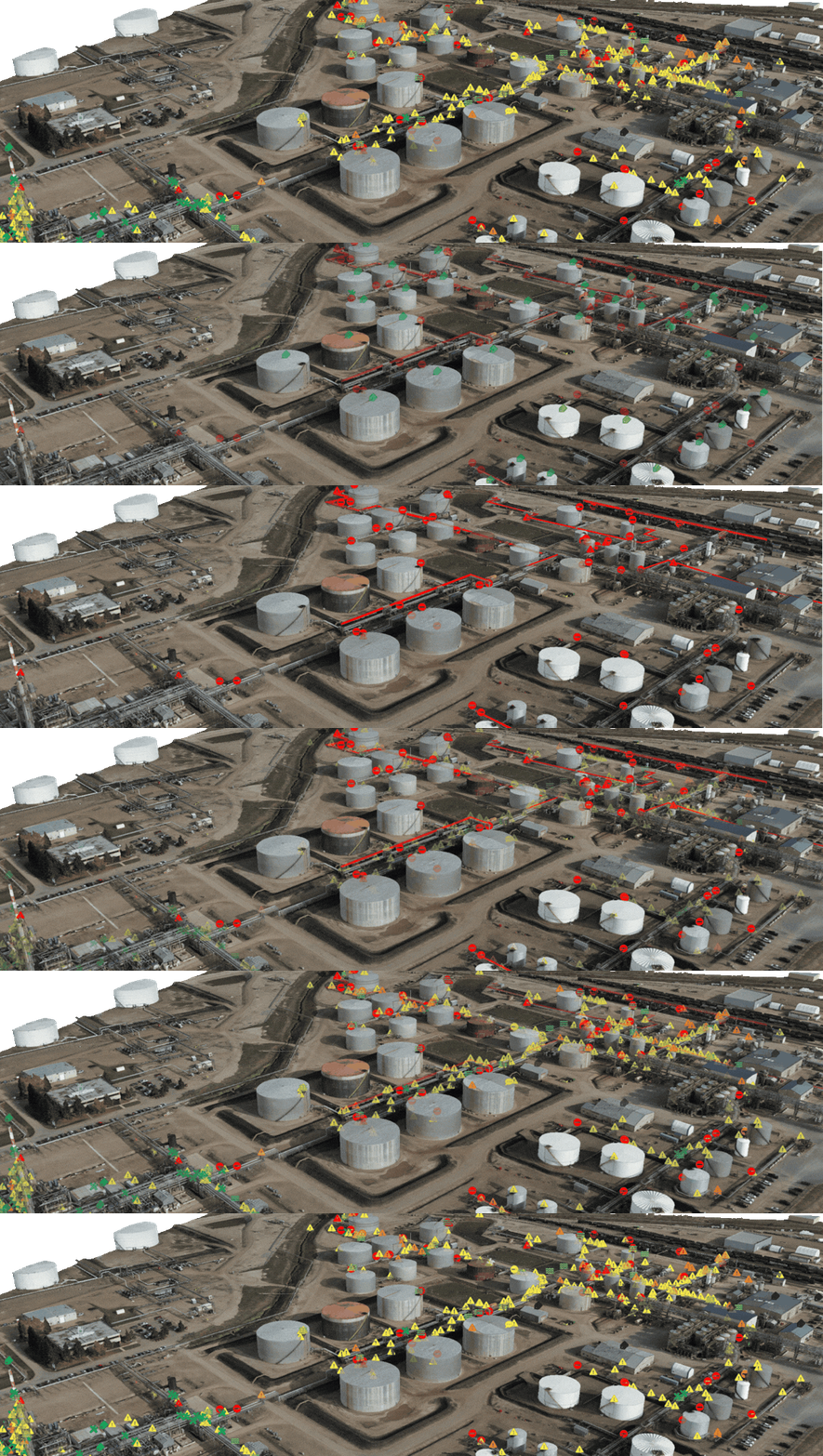
The response to the incident was a structured drone survey program built with Courtland Penk, President of Osprey Integrity: six surveys a year from September through April, running a monthly loop of capture, identify, repair, and repeat. Marvin calls it his “paper route”: a PM strategy in SAP, with a schedule, assigned work notifications, and a close-out process.
"We were actually quite surprised through even the first drone survey on just how much insulation and steam leaks we had in our high line," Marvin said.
It's a pattern Courtland has seen across every facility he’s worked with: "Everybody's doing what they can with the time and resources that they have. You're just blind to things. And more often than not, it takes an event to instigate change.”
"What I call it is a paper route," Marvin said. "We have a monthly PM strategy now set up to identify those deficiencies and repairs and the major buildups of those moments that keep managers and owners awake at night."
From thousands of photos in a folder to something planners can use
The next challenge was getting the raw data from the drones to planners in a way that was useful. Early on, Marvin describes the data as "quite convoluted. A lot of pictures, no real organisation." Thousands of flat images in folders, findings described by file name. Courtland agrees: "Before, you'd have them in a SharePoint and you're saying, look, it's in photo 114, photo 203. You had to read everything to know where something was."
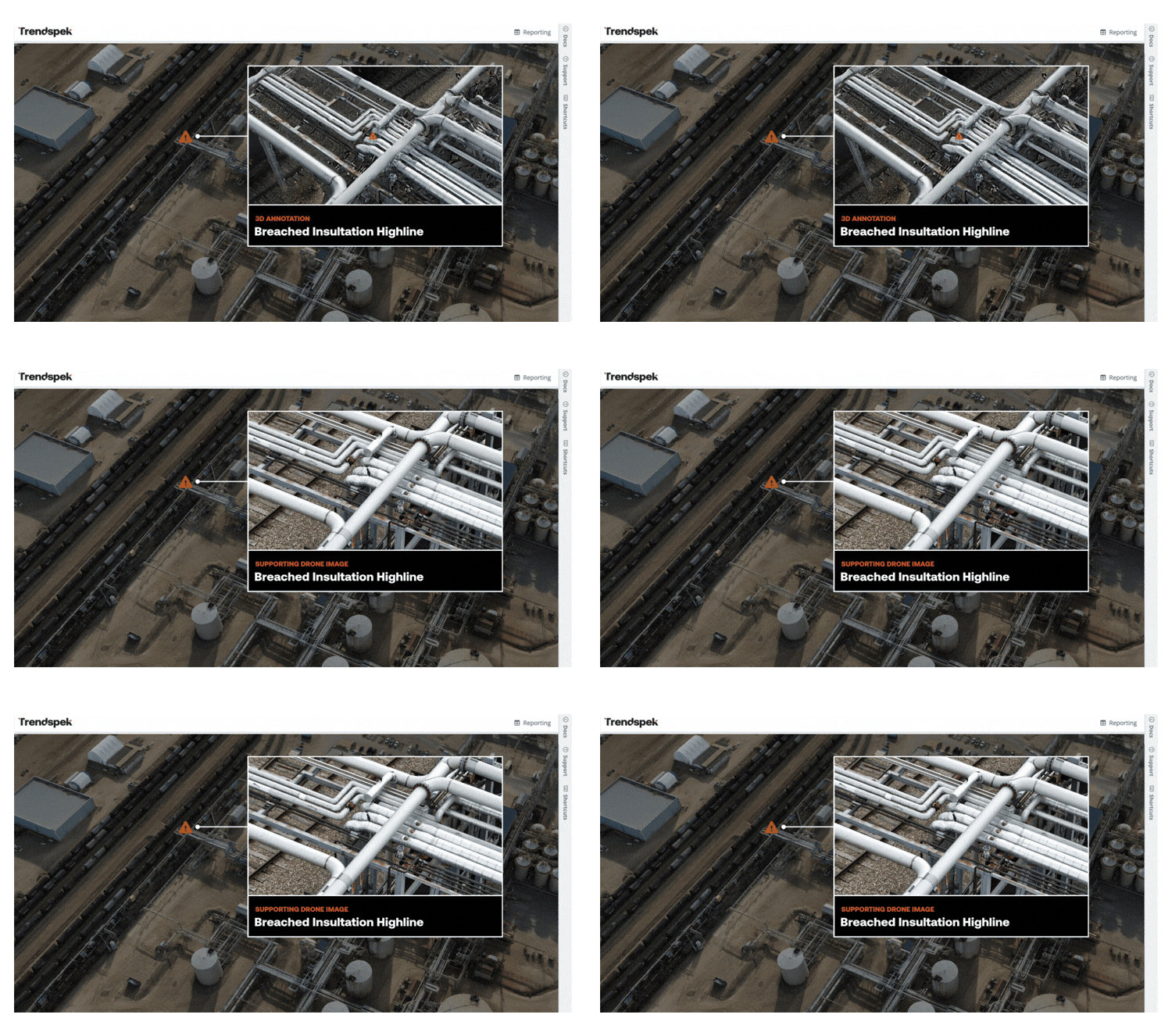
Once the program moved into Trendspek, it became spatial. Every finding was pinned to a precise XYZ location in the 3D model, tagged red, yellow or green by severity, and organised by facility area.
"I can log on at any time," Marvin says, "and I can go: here's all the ones I'm still deficient with, here's all the ones that are completed."
That information flows directly into SAP as planned work notifications rather than reactive callouts, converting what had been a reactive problem into a structured, scheduled solution.
For teams managing aerial NDT data alongside visual findings, the same spatial logic applies: UT readings and CUI data anchored to the model, rather than buried in a static report with no spatial context.
Giving contractors context before they arrive
Most rope access crews brought in for steam and insulation repairs are contractors who have never set foot in the facility. Before the spatial model, getting them oriented took real time; walking lines, explaining scope, pointing out locations in person.
"I'm handing them 40, 50, 60 pictures and going: go do these repairs," Marvin says.
"Using the 3D model, they have never been lost. There's no downtime. I don't have to go out and basically pinpoint all these different locations."
"A few hours per person adds up really quickly in a labour budget,” says Courtland. At the scale of a full turnaround, that's significant waste eliminated before work even starts.
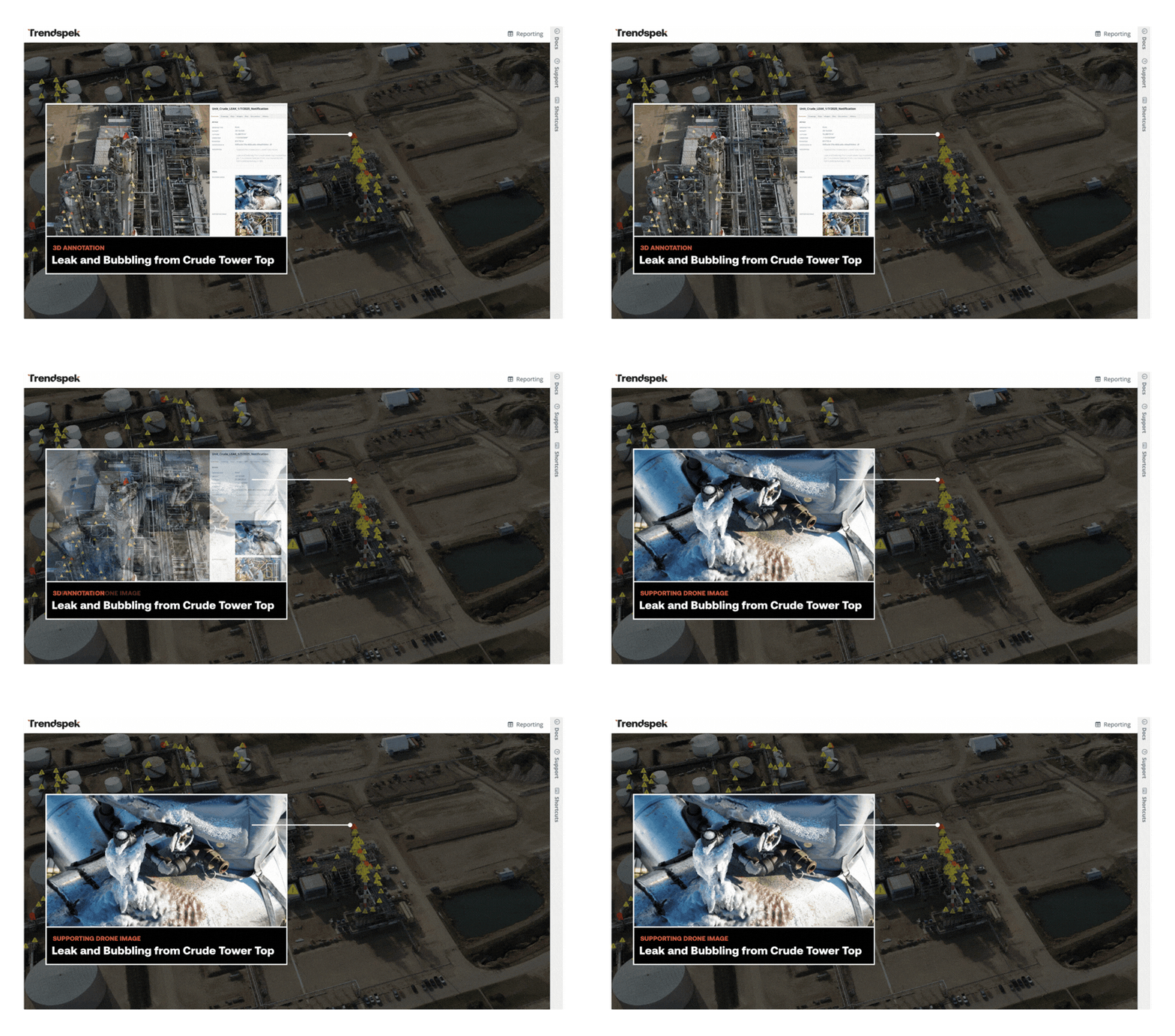
This same spatial record supports work outside the core maintenance program. When a post-turnaround check found that spring hanger gags had been left inside an active 18-inch flare line, the engineering team built the removal plan from the model alone, with no preliminary site visit. When a nipple on a crude column began leaking at elevation and created a hazardous access zone, the drone went in rather than putting operators under air, and the data captured was enough to plan the full repair package.
“Find it, before it finds you."
"It's easy to say no to drone technology and Trendspek because you just don't want to know what you need to fix. It's a cost. If you don't know it, you don't have to fix it,” says Marvin. “The problem with that is that's not process safety.”
Since September 2023, the PM program has run every winter season without interruption. 415 defects identified and resolved. 85% more facility coverage than ground-based inspection could reach. A 25% reduction in active steam leaks. Deficiencies that had been accumulating, undetected, in the high lines for years are now found, tagged, and scheduled in the time it would have previously taken to become a work order.
"When we talk about preventive maintenance, we're talking about 'find it, before it finds you,'" Marvin says. "That means we're finding the deficiencies first, as opposed to corrective maintenance, where they're finding us."
How often should refineries run drone inspection surveys for steam and insulation?

The Osprey Integrity program at this Alberta refinery runs six surveys per year, concentrated September through April during the winter-critical period when steam leaks freeze and accumulate ice load.
How do you convert drone inspection findings into planned maintenance work orders?
Findings are pinned to XYZ coordinates in a 3D model in Trendspek, tagged by severity, and flow directly into SAP as planned work notifications, replacing reactive callouts with a scheduled PM strategy.
What results can a refinery expect from a drone-based preventive inspection program?
In the first two years of this program, 415 defects were identified and resolved, there was 85% the facility coverage compared to ground-based inspection, and a 25% reduction in active steam leaks.
What is the difference between preventive and corrective maintenance in refinery inspection?
Preventive maintenance finds defects before they cause incidents: "find it before it finds you." Corrective (or reactive) maintenance responds after a defect has already manifested, often under unsafe or emergency conditions.